Are UTVs Road Legal in the UK? Rules, Registration & What You Need to Know
UTVs are found on farms, estates and amongst groundcare teams across the UK. For good reason, they are incredibly useful vehicles to have at your disposal, especially if you’re travelling across fields regularly. But before most complete their purchase, they have to consider “Are UTVs road legal in the UK?” because being able to use it everywhere makes them an even better investment.
The short answer is that some UTVs can be used on public roads, assuming they meet the legal requirements. These include correct registration, insurance, approval and equipment requirements. It is important to note that not every off-road UTV is automatically suitable for road use, so it is important that you’re sure.
In this guide, we explain what makes a UTV road legal in the UK, what checks to make before buying, and when it is worth speaking to a specialist machinery dealer for advice.
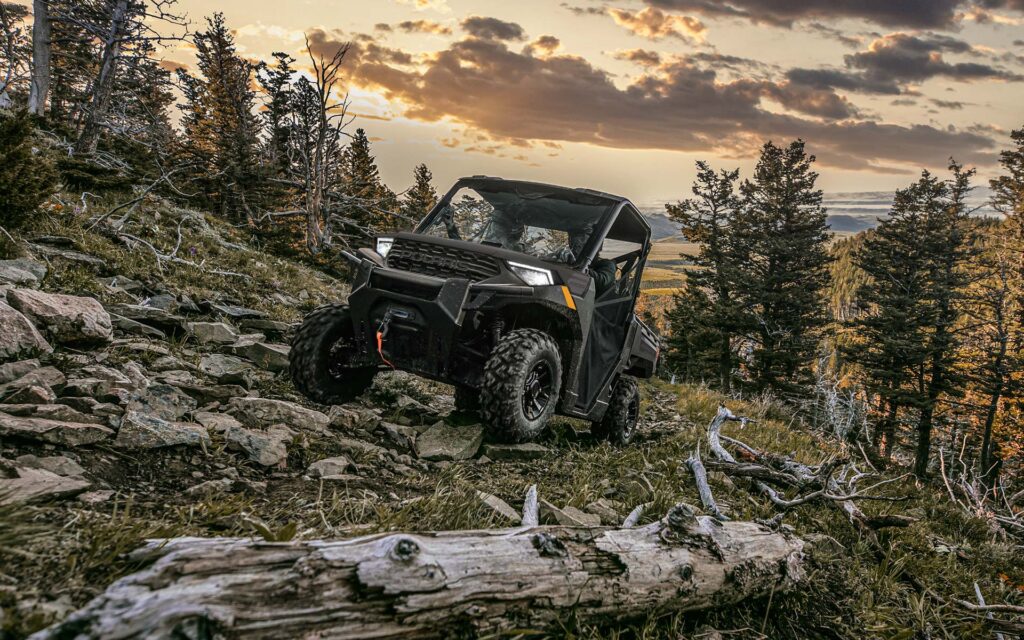
Can You Drive a UTV on UK Roads?
To answer this question, you need to understand the nuances that influence whether you can and cannot drive a UTV on UK roads. Yes, you can drive some UTVs on UK roads, but only when the vehicles are approved, registered and equipped for road use. A UTV used only on private land does not usually need the same road equipment or registration, but this changes as soon as it is driven on a public road.
For road use, the UTV needs to be registered with the DVLA, display number plates, have suitable insurance and meet the relevant lighting and construction requirements. GOV.UK guidance for quad bikes (same category as UTVs) confirms that road-going vehicles must be registered, insured and fitted with number plates, with MOT requirements applying in certain cases.
Agricultural UTV Use vs Wider Road Use
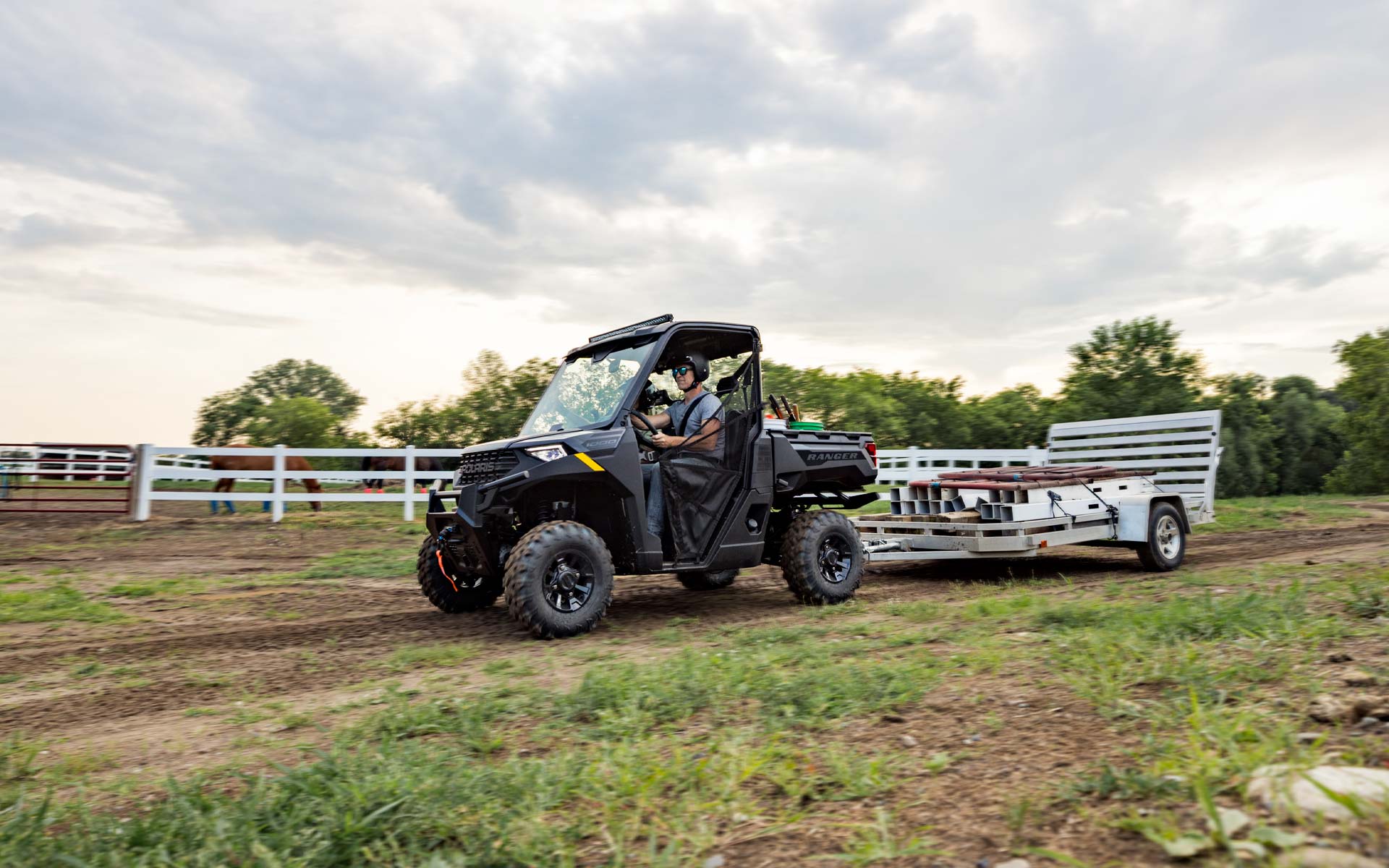
A UTV used for farming or land-based work may be treated differently from one solely used on public roads. However, agricultural UTVs can be used on public roads for short distances, provided they are registered for road use, have a number plate and meet relevant lighting and construction requirements.
This is why it is important to think about how the UTV will actually be used. A farmer moving between fields may have different requirements from a buyer wanting a vehicle for wider road journeys. Before purchasing, check the vehicle’s registration category, intended use and supporting documents.
What Makes a UTV Road Legal in the UK?
There are many requirements that make a UTV road legal in the UK, mainly influenced by the intended use of the UTV. The exact requirements can vary depending on the vehicle, its classification and how it will be used. However, a road-legal UTV in the UK may need:
- DVLA registration
- Front and rear number plates
- Suitable road insurance
- The correct approval or homologation documentation
- Working headlights and rear lights
- Brake lights
- Indicators
- Reflectors
- Horn
- Mirrors
- Road-appropriate tyres
- Seatbelts, where fitted or required
- Parking brake
- Number plate light
- Trailer socket or towing equipment, if towing
A manufacturer or dealer should be able to explain whether a specific model is supplied for road use, agricultural use, private land use or another classification. For assistance in ensuring your UTV meets your needs, get in touch with us here at Bruce Hopkins.
Can you make a UTV Street Legal?
If you’re wondering, “Can you make a UTV street legal?”It is more straightforward than you think. However, this isn’t to suggest every UTV is road-ready, with many changes and requirements needing to be met before you can hit the open road. In order to be street legal, your UTV needs to fit the required lights, indicators, mirrors, horn, number plate mounting and other equipment.
However, modifications alone aren’t enough. The UTV will also need the correct approval, registration route and documentation. If a UTV was designed only for private land, converting it for road use may be difficult, costly or unsuitable.
In many cases, it is simpler to buy a UTV that is already approved or prepared for the type of road use you need.
Road Legal UTV Checklist for Farmers, Landowners and Site Users
As a farmer, landowner or someone working on site, you need a checklist that you can run through to ensure you’re compliant. Before using a UTV on the road, check the following:
- Where will it be used? Private land, farm tracks, public roads or a mix?
- What is the main purpose? Farming, forestry, estate work, groundcare, towing or transport?
- Is it registered correctly? Check the DVLA registration category.
- Is it insured for road use? Make sure the policy matches how the vehicle will be used.
- Does it have number plates? Road-going vehicles usually need visible front and rear plates.
- Does it have the right lighting? This is especially important if travelling after dark or in poor visibility.
- Is it suitable for towing? Check towing limits, trailer connections and legal requirements.
- Can it be serviced locally? Choose a machine with reliable parts and after-sales support.
If you need a practical working vehicle rather than a recreational off-road machine, keep this checklist handy when looking to buy your UTV.
Common Questions Before Using a UTV on the Road
Before using a UTV on the road, many farmers & estate teams want to know whether it needs an MOT, what type of insurance is required, whether mirrors and indicators are essential, and whether a standard garage can service or inspect it.
The answer often depends on the UTV’s classification, age, approval and intended use. That is why it is worth checking these details before you buy, rather than assuming every road kit or lighting upgrade will make the machine fully compliant.
If you are unsure, ask the dealer for the vehicle’s approval information, registration guidance and details of what road equipment is included. Failing that, the Bruce Hopkins team is on hand to help get you in the right UTV.
Speak to Bruce Hopkins for UTV Advice And Support
Choosing the right UTV for your needs, whether that be off-road or on-road, can be confusing if you’re not well-versed in what makes each model suited to each demand. Here at Bruce Hopkins, we supply quality machinery for agriculture, groundcare and construction, backed by knowledgeable advice, servicing and parts support. If you are considering a UTV for work or estate use, speak to our team for practical guidance before you buy.
FAQs About Road Legal UTVs in the UK
Are all UTVs Road Legal in the UK?
No. Some UTVs are designed for private land or off-road use only. A UTV must have the correct approval, registration, insurance and road equipment before it can be used on public roads.
Do you need Insurance to drive a UTV on the Road?
Yes. If you drive a UTV on a UK public road, you need suitable road insurance. GOV.UK states that quad bikes used on the road must have at least third-party insurance.
Does a Road-Legal UTV need an MOT?
It depends on the vehicle’s age and classification. GOV.UK states that quad bikes used on the road need a valid MOT certificate if they are more than three years old, although some agricultural vehicle categories may have different rules or exemptions.
Can you use an Agricultural UTV on Public Roads?
Yes, in certain circumstances. Agricultural quadricycles can be used for short distances on public roads when registered for road use, fitted with a number plate and compliant with relevant requirements.
Is It Better to Buy a Road Legal UTV or Convert One?
In most cases, it is simpler to buy a UTV that is already approved or prepared for road registration. Converting an off-road-only UTV can be more complex and may not always be possible.